
 1.866.458.6999
Key Takeaways
- Rigid polycarbonate holders take drops and knocks better than any other plastic used for ID holders.
- Metal holders last longest, and a quick test at your readers confirms they suit a proximity card.
- EVA holders give you a flexible sleeve without the plasticizers that can lift print from a card.
- Acetate holders keep their shape and clarity where soft vinyl sags and clouds.
- The right holder depends on how the badge is worn and what card technology it carries, and the lanyard or reel follows from that.
Employee ID badges take plenty of wear. They get pulled in and out of winter coats, tapped against door readers, and caught on equipment or clothing. Despite frequent handling, the photo and printed details need to remain clear and readable.
Badge holders protect ID cards from scratches, bending, and surface damage while keeping credentials accessible for identification and access control. Avon Security Products carries a selection of lanyards and ID holders and can help organizations choose compatible options based on their card types, workplace conditions, and security requirements. Four common holder materials offer different levels of protection and durability.
Why the Holder Material Matters to the Card Inside
Holder damage can lead to unnecessary card replacements. Cracked attachment slots allow badges to fall, cloudy windows make photos harder to identify, and some flexible plastic sleeves can stick to printed card surfaces after prolonged heat exposure.
Material composition also matters. Health Canada explains that certain phthalates used to soften PVC are not chemically bound to the plastic and can migrate out of it. Although this does not establish that all vinyl holders damage ID cards, it highlights why material quality deserves attention when selecting flexible sleeves.
Canadian winters introduce another concern. Some plastics become brittle in low temperatures, particularly around attachment slots exposed to repeated pulling and bending. Organizations with employees working outdoors, in warehouses or between buildings should consider how holder materials perform in both cold and warm conditions.
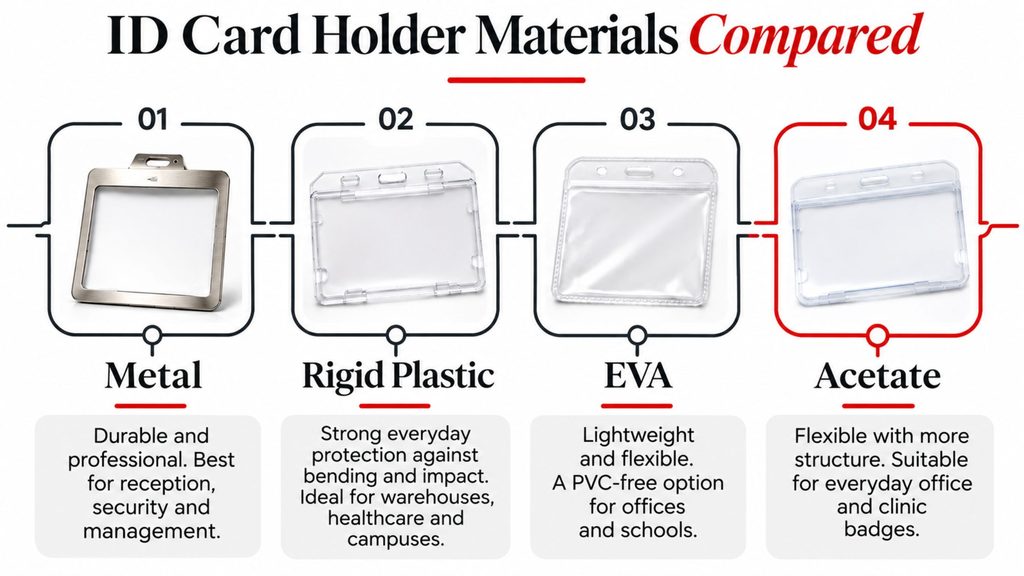
Metal ID Card Holders
Metal ID card holders typically feature an aluminum or stainless steel frame with a clip or lanyard attachment and an opening or clear window for displaying the card. Aluminum is lighter, while stainless steel offers a heavier, durable finish. Both are suitable for reception, security and management badges that are frequently displayed.
Metal holders require an additional compatibility check when used with proximity cards. Metal can interfere with the radio-frequency signals used by some access credentials, particularly 125 kHz proximity cards. Depending on the frame design, employees may need to hold their badges closer to the reader or remove them from the holder to gain access.
Before purchasing metal holders in bulk, test a sample with the organization’s existing access cards and readers. Employees should be able to scan their badges at required entry points without removing them from the holder.
Metal holders are generally better suited to credentials displayed frequently rather than those used repeatedly at access readers. Avon Security Products can advise on compatible holder styles based on the cards and access systems an organization already uses.
Molded Rigid Plastic ID Card Holders
Avon Security Products offers rigid plastic badge holders designed to protect cards from bending, scratches, and damage caused by frequent handling. Many rigid holders use durable plastics such as polycarbonate, which offers good impact resistance and helps protect cards if they are dropped or knocked against equipment.
Rigid holders are available in clear, frosted, and open-face designs. Open-face holders allow direct contact with card readers, while enclosed styles provide additional protection for printed surfaces. Coloured frames can also help distinguish employees, contractors, departments, or visitor credentials.
One consideration is surface scratching. Although rigid plastic protects the card inside, the holder itself may develop marks from repeated contact with readers, equipment or other hard surfaces. Replacing a scratched holder is generally simpler and less costly than reprinting a damaged credential.
Rigid plastic holders are particularly suitable for warehouses, manufacturing facilities, hospitals, and campuses where employees wear their badges throughout every shift.
Environment-Friendly Plastic Materials (EVA)
EVA, or ethylene vinyl acetate, is a flexible plastic commonly used as an alternative to PVC. EVA badge holders have a similar feel to traditional vinyl sleeves but can be manufactured without PVC or phthalate plasticizers, making them an option for organizations with specific material purchasing requirements.
EVA holders are lightweight, flexible, and comfortable to wear on lanyards or badge reels. They help protect printed card surfaces from scratches, fingerprints, and frequent handling without adding much bulk.
Unlike rigid plastic holders, EVA sleeves offer limited protection against bending or impact. They are better suited to employees who regularly display or scan their badges rather than those working in environments where cards are frequently dropped or caught on equipment.
EVA holders can be a practical choice for offices, schools, and administrative settings, particularly when an organization prefers PVC-free materials. Check individual product specifications before ordering, as material composition and durability can vary between manufacturers.
Acetate ID Card Holders
Acetate, also known as cellulose acetate, is a plastic derived from plant-based cellulose, commonly sourced from wood pulp or cotton. It is used in products such as eyewear frames and can be manufactured in different thicknesses and levels of flexibility.
Acetate holders offer a balance between flexibility and shape retention. Depending on the design, they can provide a firmer alternative to soft vinyl sleeves while remaining lighter and more flexible than a rigid plastic frame.
They are available in transparent and coloured finishes, allowing organizations to display employee credentials clearly or distinguish departments through colour coding. However, acetate performance depends on the material grade, thickness, and manufacturing process, so it is worth checking product specifications before purchasing in bulk.
Acetate holders are generally suited to offices, clinics and administrative environments where employees wear the same credentials regularly and need protection from everyday handling. Organizations should compare the available designs based on card thickness, attachment style, and expected wear.
ID Card Holder Materials Compared
| What it means for your badge program | Metal (aluminum or stainless steel) | Molded rigid plastic (polycarbonate) | EVA | Acetate |
|---|---|---|---|---|
| Durability | Longest service life; aluminum needs a coated finish | Highest impact resistance of the four plastics; window can scratch | Tough for a flexible sleeve; no impact protection | Holds shape and clarity longer than PVC; thin sleeves wear faster |
| Flexibility | Rigid | Rigid | Flexible | Flexible, with more body than vinyl |
| Clarity | Clear window | Clear or frosted; fine scratches over time | Clear; resists yellowing better than unstabilized PVC | Clear or coloured; holds clarity well |
| Proximity card use | Test at your readers first | Reads normally; open-face designs allow direct contact | Reads normally | Reads normally |
| Print protection | Card sits behind a window | Hard shell, nothing soft against the card | Phthalate-free, no plasticizer migration | Low migration risk; depends on the grade |
| Best use | Presented badges: reception, security, management | Daily-wear badges: industrial, healthcare, campus | Office and education badges under a PVC-free policy | Daily office or clinic badges that need a flexible, long-lasting holder |
How to Choose the Right Holder for Your Badge Program
Start with the type of ID card your organization issues. Printed photo IDs need a holder that protects the card surface and keeps identification details visible. Proximity and smart cards also need to work with existing access readers, making rigid plastic, EVA, and acetate holders worth considering. Metal holders may also be suitable, provided they have been tested with the organization’s access system.
Magnetic stripe cards have different requirements. Employees who swipe their badges several times a day need a holder that allows the card to be removed easily. An open-face rigid holder or flexible sleeve with a thumb notch can make frequent use more convenient.
Consider how employees wear and use their badges. Cards attached to breakaway lanyards in hospitals, warehouses or manufacturing facilities may experience more pulling, movement, and contact with equipment than badges attached to reels in office settings. Employers should also consider workplace hazards and safety requirements when selecting badge attachments, particularly for employees working outdoors. Rigid holders offer additional card protection in these environments, while flexible materials may be suitable for employees who primarily display their credentials.
Canadian weather is another consideration, particularly for employees working outdoors or moving between buildings. The Canadian Centre for Occupational Health and Safety provides guidance on choosing equipment suited to cold-weather conditions. Some plastics become brittle in low temperatures, increasing the risk of cracks around attachment slots.
An organization’s work ID badge dos and don’ts can also influence holder selection. Requirements for badge visibility, placement, and accessibility help determine whether employees need clips, reels, lanyards, or a combination of attachments.
Confirm the Holder Matches Your Cards
Card dimensions, thickness, access technology, and attachment style should all be checked before ordering badge holders in bulk. A holder that is too tight can make cards difficult to remove, while an unsuitable attachment may increase wear around the card or holder slot.
Avon Security Products helps Canadian organizations select compatible badge holders based on the credentials they already issue and how employees use them. With a selection of holders, lanyards, and reels, Avon can help identify suitable options for offices, healthcare facilities, industrial workplaces, and other environments.
Orders ship from Canadian inventory, helping organizations avoid cross-border duties and brokerage fees on domestically fulfilled purchases.
Need help choosing badge holders for your organization? Contact Avon Security Products to discuss your card type, access requirements, and preferred attachment style.
Frequently Asked Questions
What is the most durable material for an ID card holder?
Rigid plastic holders, particularly those made from polycarbonate, offer good impact resistance and protection against bending and frequent handling. They are suitable for employees who wear their badges throughout the workday, including those in warehouses, manufacturing facilities, and healthcare settings.
Metal holders can also provide long-lasting protection, although compatibility with proximity cards should be checked before purchasing. EVA and acetate are flexible alternatives for workplaces where impact protection is less important.
Do vinyl badge holders damage ID cards?
Some soft vinyl holders can stick to printed card surfaces, particularly after prolonged exposure to heat. Material composition, print quality, and storage conditions can all affect the risk of damage.
Certain plasticizers used in PVC can migrate out of the material, although this does not establish that all vinyl sleeves cause print transfer. Organizations concerned about printed card surfaces can consider holders specifically designed to resist print transfer, along with EVA, acetate, or rigid plastic alternatives.
Cold temperatures can also affect some vinyl materials, increasing the risk of cracking around attachment slots. Checking product specifications is particularly important for outdoor workplaces.
Can a metal badge holder stop a proximity card from working?
Yes. Metal can interfere with the radio-frequency signals used by proximity cards and reduce their effective reading distance. The extent of the interference depends on the card technology, reader, and holder design.
Some cards may need to be held closer to the reader, while others may not work reliably inside certain metal frames. Test a sample holder with the organization’s existing access cards and readers before placing a bulk order.
Which badge holder is best for healthcare or industrial staff?
Rigid plastic holders are often suitable for healthcare and industrial environments because they protect cards against bending, impact, and frequent handling.
Open-face designs can be useful for employees who regularly tap their cards against access readers, while coloured frames can help distinguish departments, contractors or visitor credentials.
Attachment style matters as well. Breakaway lanyards may be appropriate where snagging hazards are a concern, while retractable badge reels allow employees to present credentials without removing them. Workplace safety requirements should guide the final selection.
Are EVA and acetate holders better for the environment?
EVA and cellulose acetate are alternatives to PVC, making them worth considering for organizations with PVC-free purchasing requirements.
EVA can be manufactured without phthalate plasticizers or BPA, while cellulose acetate is derived from plant-based materials such as wood pulp or cotton. However, neither material is automatically biodegradable or environmentally preferable in every application.
Environmental impact depends on the specific formulation, manufacturing process, durability, and disposal options. Organizations with sustainability purchasing policies should confirm material composition and any environmental certifications with the supplier before ordering.