
 1.866.458.6999
Employee ID cards are no longer simple photo badges. Ultra secure ID cards are identification credentials designed with advanced visual, digital, and physical security features that help reduce counterfeiting, unauthorized access, and credential misuse.
For organizations managing sensitive facilities, protected data, restricted access areas, or large employee populations, secure ID card printing plays a critical role in workplace security, access control, and identity verification.
At Avon Security Products, organizations across Canada rely on enterprise-grade systems and secure credential technologies that help strengthen employee ID security while supporting long-term credential management.
Inside This Guide
- Ultra secure ID cards combine visual, digital, and embedded security features to reduce fraud and unauthorized duplication.
- Lamination, holograms, UV printing, RFID technology, and ghost images all strengthen credential protection.
- Secure printing hardware matters just as much as card design.
- Organizations should match ID card security features to their operational risk level.
- Avon Security Products supports Canadian organizations with secure ID printing systems, supplies, and technical guidance.
Security Starts Long Before the Card Is Printed
Many organizations focus entirely on how an ID card looks. Real credential security starts much earlier.
Ultra secure ID programs combine printer security, card materials, software controls, access permissions, and authentication technologies into one connected system. A professionally designed badge with weak printing controls can still become vulnerable to internal misuse or unauthorized duplication.
This is why many organizations invest in complete secure credential printing solutions for Canadian organizations rather than standalone printers alone.
Modern credential security often includes:
- Controlled printer access using administrator permissions
- Encrypted card data transmission
- Secure ribbon handling and disposal
- Authentication features embedded directly into the card
- Controlled badge issuance workflows
- Access control integration with building security systems
The strongest ID programs reduce both external counterfeiting risks and internal credential misuse. The Government of Canada also highlights identity, credential, and access management as a critical part of protecting digital systems, facilities, and organizational data environments.
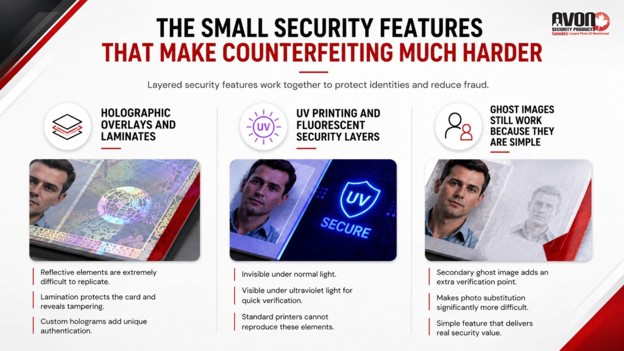
The Small Security Features That Make Counterfeiting Much Harder
Professional counterfeiters often look for easy visual shortcuts. If an ID card lacks layered security features, duplication becomes significantly easier.
Modern high-security ID cards typically combine multiple visible and invisible security elements together. A stronger understanding of the different types of ID card printing can also help organizations choose security features that align with their operational risks, credential usage, and access control requirements.
Holographic Overlays and Laminates
Lamination does more than protect the surface of the card from wear. Holographic laminates create reflective visual elements that are extremely difficult to replicate using standard printing equipment. These overlays also make tampering more obvious because the laminate becomes damaged if someone attempts to alter card information or replace a photo.
Some organizations use custom holographic overlays that include company logos, text, or unique patterns for additional authentication.
UV Printing and Fluorescent Security Layers
UV printing remains one of the most effective anti-counterfeit tools in secure badge printing.
Specialized ribbons create markings, logos, or text that remain invisible under normal lighting but appear under ultraviolet light. Since standard office printers cannot reproduce these elements accurately, UV printing creates a hidden verification layer that security personnel can quickly validate.
Healthcare systems, government facilities, schools, and corporate campuses frequently rely on UV printing for additional employee ID security.
Ghost Images Still Work Because They Are Simple
Ghost images remain effective because they add another visual comparison point without complicating the card design.
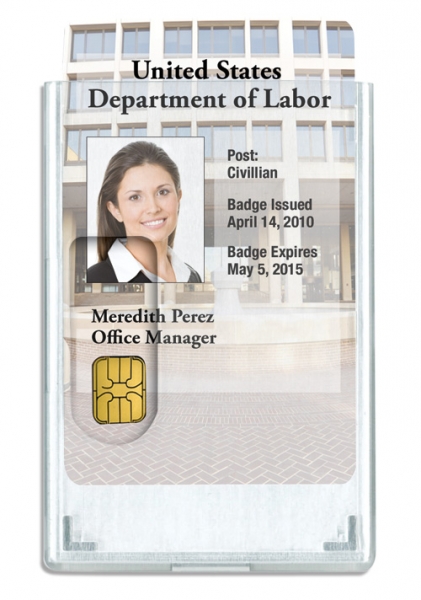
A smaller semi-transparent image of the cardholder appears elsewhere on the badge, making photo substitution more difficult. While simple, this feature still increases the time and effort required to alter or duplicate a credential successfully.
Choosing the Right Printer Changes Everything
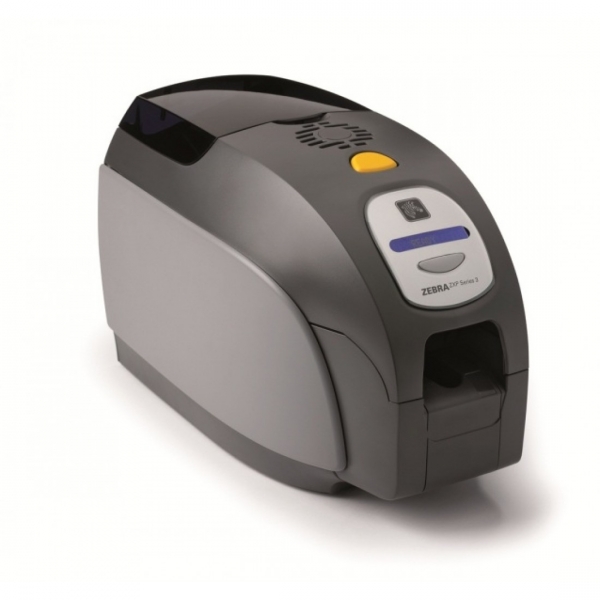
Not every ID printer is designed for enterprise-level credential security. Organizations printing high-security ID cards should evaluate printers based on encryption capabilities, authentication support, lamination options, and access control compatibility rather than print speed alone.
Selecting the wrong hardware can weaken an otherwise strong credential system.
Organizations evaluating secure ID card printer systems should look for features such as:
- Password protected printer access
- Secure boot protection
- Encrypted data transfer
- Lamination capabilities
- UV printing support
- RFID and smart card encoding
- Audit logging features
- Enterprise software integration
Modern printers are no longer simple output devices. They are security infrastructure. The National Institute of Standards and Technology outlines how modern identity verification systems increasingly rely on secure credentials, authentication standards, and controlled access frameworks to strengthen organizational security.
Access Control Cards Are Becoming Multi-Layer Credentials
Modern ID cards often do far more than identify employees. Today’s credentials frequently combine physical identification with building access, attendance tracking, payment systems, visitor management, network authentication, and time logging.
This shift toward digital identity and multi-application credentials is changing how organizations approach badge security.
A single compromised card can potentially expose multiple systems at once. That is why organizations increasingly use encrypted RFID technology, smart chips, and secure encoding methods when creating secure access control cards for workplaces.
High-security access credentials may include:
- RFID technology
- Smart card chips
- NFC functionality
- Biometric integrations
- Encrypted credential storage
- Mobile credential compatibility
As credential systems become more connected, the importance of secure printing standards increases significantly.
Why Material Quality Matters More Than Most Organizations Realize
Card durability directly affects security. Low-quality cards wear down faster, making photos harder to verify and increasing the risk of delamination, cracking, fading, or barcode failure. Damaged cards also create opportunities for tampering and visual manipulation.
High-security ID cards often use:
- Composite PVC materials
- Polycarbonate construction
- Tamper resistant overlays
- Durable laminate finishes
- Scratch resistant coatings
Organizations managing long-term employee credentials or high-frequency badge usage environments often benefit from higher-grade materials designed for heavy operational use. Many organizations also choose to get expert guidance on secure ID card systems when evaluating card materials, printer compatibility, durability requirements, and long-term credential security needs.
Visitor Credentials Can Become a Security Weak Spot
Employee badges usually receive the most attention, but visitor credentials often create overlooked vulnerabilities.
Temporary badges with weak verification processes can allow unauthorized individuals to move through facilities without proper oversight.
Organizations using visitor badge management and tracking systems can improve facility security through:
- Temporary badge expiration controls
- Photo visitor credentials
- Check-in verification workflows
- Visitor access restrictions
- Badge tracking logs
- Integrated access permissions
Visitor management security matters just as much as employee credential security in many environments.
Secure ID Programs Depend on More Than Technology
Technology matters, but operational habits matter too. Even advanced high-security ID cards become vulnerable when organizations lack proper credential policies.
Strong credential management typically includes:
Controlled Badge Issuance
Only authorized personnel should create or approve employee credentials.
Immediate Deactivation Procedures
Lost, stolen, or terminated employee badges should be disabled immediately.
Secure Supply Management
Blank cards, ribbons, laminates, and encoding supplies should remain secured and monitored.
Staff Verification Procedures
Security personnel should know how to validate visual and hidden security features properly.
According to CISA, effective physical security strategies combine technology, operational procedures, access control, and employee awareness rather than relying on a single layer of protection alone.
Many credential security failures happen because operational procedures fall behind the technology being used.
The Best ID Security Programs Layer Multiple Protections Together
There is no single feature that makes an ID card impossible to duplicate. The strongest credential systems rely on layered security strategies that combine visible authentication, hidden verification, controlled printing access, encrypted technologies, and strong credential management policies together.
This approach increases the time, skill, equipment, and risk required to duplicate or misuse a credential successfully.
The Canadian Centre for Cyber Security also notes that strong identity, credential, and access management practices help organizations reduce unauthorized access risks across connected systems and facilities.
Organizations that invest in multiple layers of credential protection often create significantly stronger long-term security outcomes than organizations relying on one isolated feature alone.
Key Takeaways
- Ultra secure ID cards combine physical, digital, and operational security measures.
- Holograms, UV printing, ghost images, and RFID technologies all strengthen credential protection.
- Printer security matters just as much as card design.
- Visitor credentials should follow the same security standards as employee badges.
- Avon Security Products supports organizations across Canada with secure printing hardware, supplies, and technical expertise.
Frequently Asked Questions
What makes an ID card ultra secure?
Ultra secure ID cards use multiple security layers that help prevent duplication, tampering, and unauthorized use. Common features include holographic overlays, UV printing, RFID technology, encrypted smart chips, ghost images, and tamper resistant laminates combined with secure printing workflows.
What is the best printing method for secure ID card printing?
The best method depends on organizational security needs. Many high-security environments use retransfer printing combined with lamination, UV printing, and RFID encoding because these technologies improve print quality, durability, and anti-counterfeit protection.
Are RFID cards more secure than standard photo ID cards?
RFID cards can provide stronger security when properly encrypted and integrated into secure access systems. They allow organizations to control building access, authenticate users, and track credential activity while reducing risks associated with manual verification alone.
Why is lamination important for employee ID security?
Lamination protects cards from wear, tampering, fading, and unauthorized alterations. Holographic laminates also add visual authentication features that make credentials significantly harder to duplicate using standard printing equipment.
How can organizations choose the right secure ID card system?
Organizations should evaluate printer security features, encoding technologies, software controls, material durability, and access control compatibility based on their operational risks and security requirements.
Secure ID Cards Are About Trust as Much as Technology
A secure ID card does more than display a name and photo. It helps organizations control access, protect people, strengthen accountability, and reduce operational risk across entire facilities.
As credential fraud and unauthorized duplication methods continue evolving, organizations need security strategies that go beyond basic badge printing.
Avon Security Products helps Canadian organizations implement secure ID technologies designed for real operational environments, from corporate offices and healthcare facilities to schools, government buildings, and industrial workplaces.
Organizations looking to improve credential protection or learn more about the different types of ID card printing can also speak with a secure ID printing specialist to evaluate the right combination of hardware, software, materials, and security features for their environment.
 Components
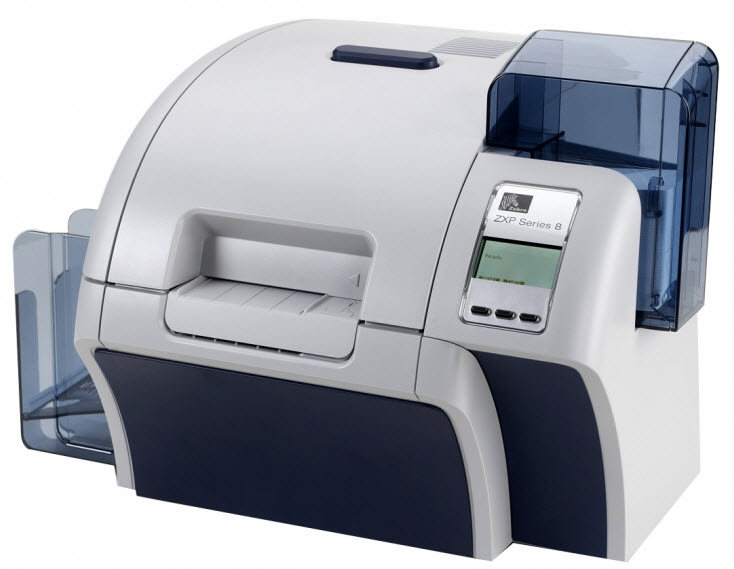 1. Zebra ZXP Series 9 Retransfer ID Card Printer
 Reduced Printing Quality
 ID Card Printer Cleaning Frequency
 Benefits of Name Badges